


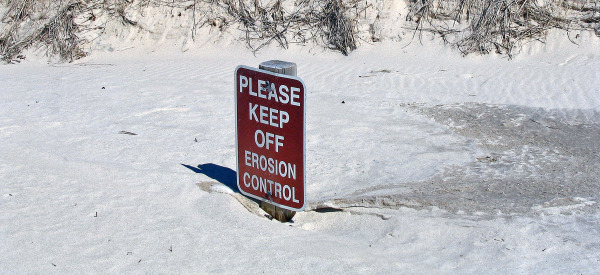
In 2003, Florida officials decided to re-nourish 6.9 miles of beach in Destin, Florida, to repair damage from hurricanes. In the process, the State created a new boundary line between the oceanfront property owners and the public portion of the beach. Although the beaches in Florida have always been public up to the “mean high water line,” this new line, which the state called the “erosion control line,” effectively allowed the State to claim a portion of the beachfront that previously lay above the mean high water line.
Property owners fought back, filing a lawsuit that charged the State with illegally seizing property without compensation. The case has been in the courts ever since, with the initial Florida appeals court ruling in favor of the property owners eventually being overturned by the Florida Supreme Court. In Dec of 2009, the homeowners decided to take their case to the U.S. Supreme Court, arguing that the Florida Supreme Court decision had unconstitutionally deprived them of their property. The outcome of this case is pending and can affect all waterfront property owners.
In April, Fox News aired the following segment about this case in their series on property rights abuses entitled “It’s your Land”.
FYI: FOX News is seeking examples of property rights abuse across the country and property owners who would like to have their legal fight or abuse profiled should go to the FOXNEWS.com website and report this abuse. (http://www.foxnews.com/topics/politics/its-your-land.htm). (Reports can be seen Sundays from 10 to 12 noon, E.S.T. on the Fox News Channel).
Additional information: Erosion Control Fact Sheet
Previous article: Active Waterfront Property Rights Cases across the states.
Erosion Control Photo courtesy of: muffinman71xx

Comment ( 1 )