


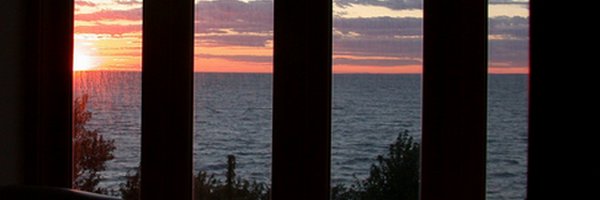
Sunset over Long Island Sound
Southold VOICE is not only talking docks, we have serious concerns about the Soundfront also, where there are a number of issues related to low beach front, high bluff, coastal erosion, litter, trespassing, illegal fishermen etc. The key issue for all of us on Long Island Sound is coastal erosion. Most Soundfront property owners who have not already bulkheaded (currently non-permittable) now live on an eroding high bluff. Owners can expect it to take 4 years or more to get the DEC to approve a rock wall that even then, is not guaranteed to solve the problem, even at a cost to the owner of as much as $200,000 on what the DEC itself refers to as “an experiment.”
Our own Town Trustees are aware of this, and may be willing to agree a full revetment* as the best solution, but this has proved to be at odds with the DEC position. Owners have been told that their house needs to be in danger of falling into the Sound before they would approve a full revetment, which course of inaction on their part can result in extensive loss of valuable property for the owner, as much as an acre in one case.
Owners have been told to simply plant, only to watch $30,000 of beach grass and $50,000 of staircase down the bluff subsequently wash away. Only the DEC appears convinced that a small row of rocks at the base of the bluff is sufficient to withstand nor’easters and other storms that eat away at the base of the bluff. Owners themselves seeking to protect their property and other experts completely disagree.
We sense the DEC’s role is to assist the State in taking private property for the benefit of the State, and that they are using every means available (including inaction) to do so. SoutholdVOICE said as
much last year in the “LWRP for Dummies” article published here.
Without organizations like SoutholdVOICE, individual homeowners feel powerless to protect their property and work in a balanced way with DEC to do so. Expensive lobbying in Albany to get DEC to approve something reasonable is an option, but not for every individual who is impacted, it’s too expensive. So, while bay front dock issues are pressing, Southold VOICE is mindful that Coastal Erosion issues are no less pressing for our Soundfront members, and equally deserving of our attention.
Please take a moment to familiarize yourself with the issues facing Soundfront property owners. Click “play” below to hear local attorney Pat Moore talk about permitting problems owners face in the Coastal Erosion zone, and the negative impact of recent changes in the zoning code on home values in Southold Town. Then add your 2 cents by leaving a comment below.
| Add Pat Moore’s talk about permitting issues for waterfront property owners on Long Island Sound to your page |
(Tech tip: If you experience buffering problems during this 7 minute video, try closing other browser windows and programs you may have running in the background.)
* Revetment: click here for definition

Comments ( 2 )